Holy Face of Jesus: A Designer’s Embroidery Review
When evaluating religious artwork for machine embroidery, the margin for error is incredibly slim. Spiritual designs carry an emotional weight that generic graphics simply do not possess, and as makers, we bear the responsibility of translating that reverence into thread. I recently reviewed the Holy Face of Jesus design asset to determine its viability for real-world production. While this file is marketed primarily as an SVG Crown Of Thorns cut file compatible with Cricut Design Space and Silhouette Studio, my focus was strictly on its potential as a foundation for embroidery digitizing and mixed-media application. For the Etsy seller or apparel decorator, understanding how this specific aesthetic translates from screen to fabric is the difference between a cherished heirloom and a failed project.
First Impressions and Visual Solemnity
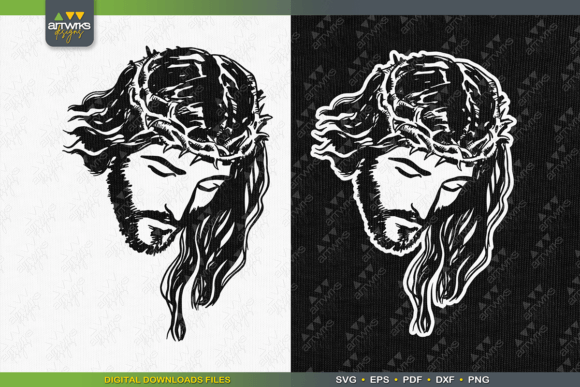
My initial assessment of the Holy Face of Jesus graphic centers on its line integrity and emotional resonance. In the realm of Crafts and Graphics, religious iconography often suffers from over-simplification, but this design maintains a necessary level of detail in the facial features and the crown of thorns. The mood is undeniably solemn and traditional, which immediately dictates its best use cases. This is not a playful nursery motif; it is a mature, devotional image that demands respect in execution.
Visually, the layout suggests a portrait orientation that works beautifully for vertical applications. As a designer, I look for clean vector paths when considering conversion to a digital embroidery file. The lines defining the face appear fluid rather than jagged, which is promising for satin stitch borders or running stitch outlines. However, the intricate shading present in the original graphic serves as a warning: you cannot simply auto-digitize this. To capture the sanctity of the image, one must manually map out fill stitch areas and adjust stitch density to prevent the fabric from puckering under the weight of detailed facial features.
Real-World Application: The Custom Sweatshirt Test
To truly evaluate this design, I mentally walked through a recent client request for a custom embroidered sweatshirt intended as a confirmation gift. This scenario highlights both the strengths and challenges of using the Holy Face of Jesus in custom apparel. A sweatshirt offers a stable, warm canvas, but the fleece backing and knit structure require careful stabilizer selection to prevent distortion.
In this context, the design performs exceptionally well as a center-chest placement. The visual weight of the Crown of Thorns anchors the piece, making it suitable for adult or teen wear. For this specific handmade product, I would recommend converting the outer elements of the crown into an applique design. Using a textured linen or raw-edge cotton for the thorns adds a tactile dimension that pure thread cannot achieve, while keeping the overall stitch count manageable. The face itself should remain in high-quality fill stitches with varied directionality to mimic the shading of the original art. This approach elevates the finished product from a standard print alternative to a genuine textile artifact, increasing perceived value for boutique branding and personalized gift markets.
Navigating Fabric Limitations and Hoop Constraints
While the design shines on stable knits, caution is required for other substrates. I would advise against using highly detailed versions of the Holy Face of Jesus on stretchy performance fabrics or sheer materials without significant modification. The stitch density required to render facial expressions clearly can cause tunneling on thin fabrics, ruining the drape and wearability of items like baby clothes or lightweight tea towels.
Small hoop sizes also present a challenge. If you are working with a 4x4 hoop, the intricate details of the eyes and mouth may become lost or muddy. In such cases, simplification is key. You might opt for a silhouette version or focus solely on the Crown of Thorns as a border element. Conversely, for large format projects like pillow covers or wall hangings, the full detail can be utilized effectively. Always verify your hoop size against the final dimensions of the digitized file before committing to a commercial embroidery run. Testing on scrap fabric that matches your final substrate is non-negotiable; what looks crisp on screen can easily become a dense, bulletproof patch on actual fabric if tension and density aren't calibrated correctly.
Critical Considerations for Dark and Textured Fabrics
Color contrast defines success with this specific imagery. On dark fabrics, the Holy Face of Jesus requires either a light underlay base or a strategic color palette shift to ensure visibility. Stitching flesh tones directly onto black navy will result in a sunken, invisible design. Furthermore, textured fabrics like burlap or heavy canvas can swallow fine details. If creating rustic holiday embroidery or farm-style decor, consider using the design as a printable mockup guide for heat transfer vinyl combined with simple embroidered accents, rather than attempting full coverage stitching on an uneven surface.
Professional Standards for Sellers and Makers
For the creative entrepreneur selling digital assets or physical goods, professionalism hinges on technical accuracy and licensing clarity. Before listing any finished product featuring this design on Etsy or at craft fairs, confirm the commercial usage rights associated with your specific purchase. Just because a file is available for personal crafting does not automatically grant permission for mass-produced merchandise.
When presenting this design to clients, use high-quality mockups that accurately represent thread sheen and texture. Avoid flat, digital-only previews that mislead buyers about the tactile nature of embroidery. For those selling the digital embroidery file itself, include comprehensive notes on recommended stabilizers, thread colors, and fabric types. This transparency builds customer trust and reduces support inquiries regarding poor stitch-outs.
- Test Stitch Density: Always run a sample to ensure facial details remain distinct without perforating the fabric.
- Verify Licensing: Confirm whether the source allows for commercial sale of finished embroidered products or digital file redistribution.
- Stabilizer Strategy: Use cut-away stabilizer for knits and tear-away for wovens to maintain registration during complex fills.
- Thread Contrast Check: View your thread palette in natural light against the chosen fabric to ensure the expression reads clearly.
- Mockup Accuracy: Create printable mockups that reflect realistic stitch texture to set proper buyer expectations.
Elevating the Finished Product Through Intentional Design
Ultimately, the Holy Face of Jesus is a powerful asset for the discerning maker, provided it is treated with technical intention. It bridges the gap between digital convenience and traditional craftsmanship when executed correctly. Whether you are creating a personalized gift for a baptism, a boutique item for a religious shop, or a unique patch for ministry apparel, the success lies in respecting the medium.
Do not let the "SVG" label limit your vision. While optimized for laser cutting and vinyl, the underlying geometry of this design holds immense potential for needle and thread. By adapting the artwork for textile realities—adjusting for fabric grain, managing density, and honoring the solemnity of the subject matter—you transform a simple graphic into a lasting work of devotion. For the small business owner, this attention to detail is what separates a commodity from a keepsake, ensuring your work resonates deeply with those who cherish it.